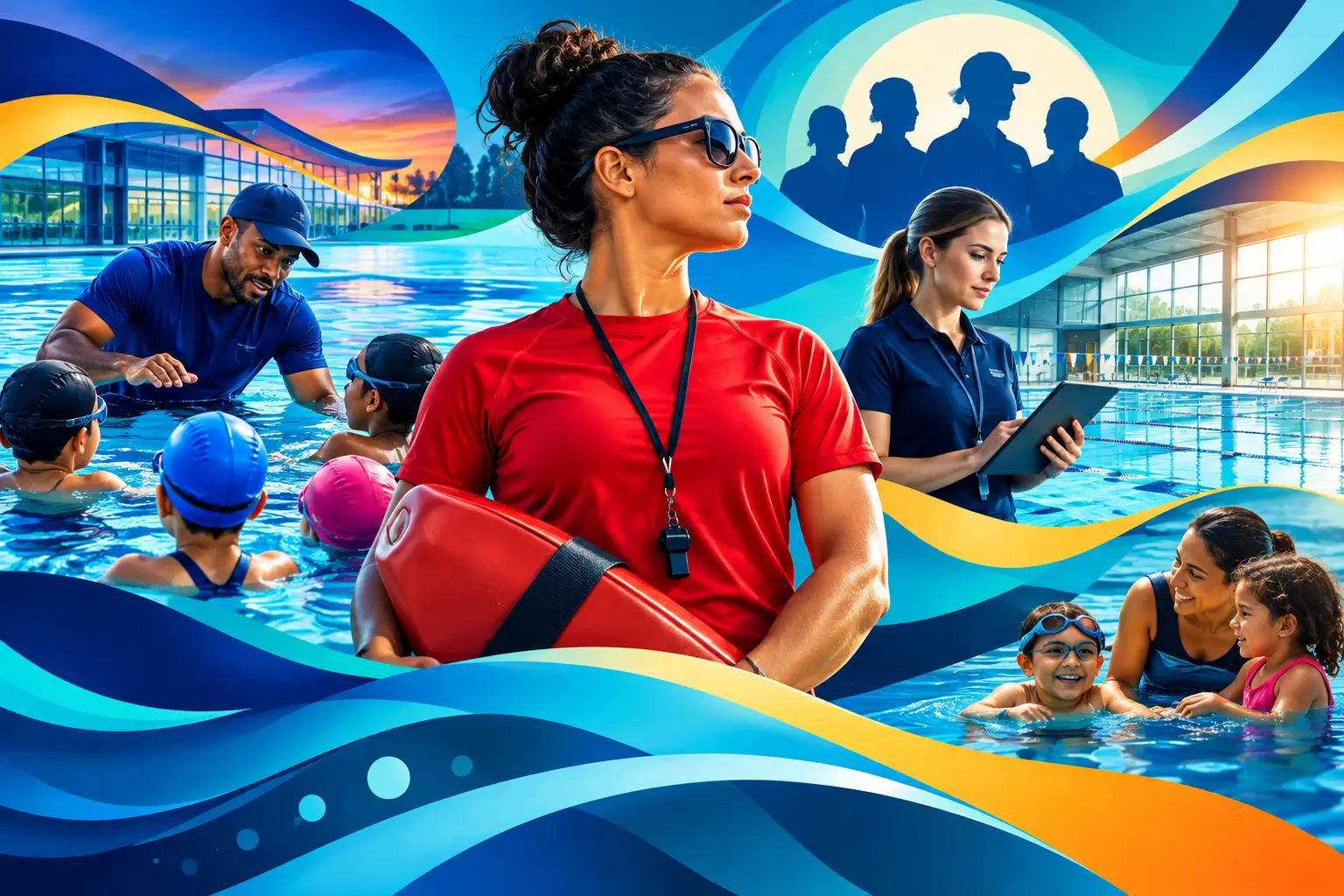
A pool can have sound equipment, a well-designed schedule, and strong community demand, yet still struggle if the people responsible for daily operations do not have the support to succeed. Aquatic workforce trends are changing what facilities need from lifeguards, instructors, operators, coaches, and managers. The central challenge is no longer simply filling open shifts. It is building capable teams that can protect participants, deliver quality programs, and sustain the facility over time.
For many communities, aquatics staffing remains seasonal and competitive. At the same time, the work has grown more complex. Staff members are expected to respond to emergencies, communicate with families, manage behavior, operate technology, maintain water quality, teach diverse populations, and represent the facility with professionalism. Leaders who treat workforce development as an operational system, rather than a short-term hiring task, are better positioned to meet that challenge.
The Aquatic Workforce Trends Leaders Need to Watch
Seasonal hiring is becoming a year-round responsibility
The traditional approach to staffing often begins in late winter or spring: advertise positions, schedule certification courses, hire quickly, and prepare for opening day. That timeline can still work in some markets, but it leaves little room for setbacks. A smaller candidate pool, class cancellations, competing employers, or delayed onboarding can quickly create coverage gaps.
More facilities are treating recruitment as a continuous activity. They maintain relationships with schools, colleges, youth programs, swim teams, and community organizations throughout the year. They invite prospective employees to observe operations, volunteer at events where appropriate, or learn about aquatic career paths before they are old enough or ready to apply.
This does not mean every facility needs a large recruitment budget. It means leaders need a visible, repeatable process. A candidate who sees aquatics as meaningful work is more likely to return for another season than one who views the position as an anonymous summer job.
Entry-level staff need a clearer pathway forward
Lifeguarding and swim instruction are often a first job. That is an opportunity, not a limitation. A well-run aquatic program can introduce young employees to responsibility, public service, teamwork, communication, and leadership. But those benefits are not automatic. New staff need structure that makes expectations clear and advancement feel possible.
A lifeguard who performs reliably may be ready to become a lead guard, instructor mentor, deck supervisor, instructor trainer, or program coordinator. Some may develop an interest in facility operations, coaching, adaptive programming, or water-safety education. Others will carry the skills they gained in aquatics into different professions. Both outcomes have value for the community.
The practical question for managers is whether employees can see the next step. A job description alone is not a pathway. Staff need to understand what knowledge, performance, and training are required to advance, along with when those opportunities will be available.
Retention depends on the daily work experience
Competitive pay matters, particularly when aquatic employers are competing with retail, hospitality, camps, and other seasonal work. But compensation is only one part of retention. Employees also assess whether schedules are predictable, whether supervisors communicate respectfully, whether training prepares them for real situations, and whether they are supported when a shift is difficult.
Aquatic work requires concentration. When staffing is thin, dependable employees may be asked to take extra shifts, cover unfamiliar assignments, or solve problems without adequate support. Over time, that can lead to fatigue and turnover. A facility should not assume commitment can indefinitely compensate for an understaffed schedule.
Retention improves when leaders make operational basics dependable: publish schedules early, provide reasonable break coverage, respond promptly to availability requests, recognize growth, and conduct regular check-ins. These actions are not perks. They help staff remain attentive, prepared, and willing to return.
Training is moving beyond initial certification
Initial certification establishes an essential baseline, but it cannot address every situation a staff member will encounter during a season. Effective facilities build ongoing learning into their operating calendar. Short, focused in-service sessions can reinforce surveillance practices, emergency action plans, customer service standards, equipment use, documentation, and role-specific responsibilities.
The best training reflects the facility itself. A staff member should understand how visibility changes at different times of day, where communication equipment is located, how deck layouts affect supervision, and what procedures apply to the programs actually offered at that site. A generic scenario can establish principles. Site-specific practice makes those principles usable.
Training also should include the human side of the job. New supervisors may need help giving feedback. Instructors may need strategies for communicating with parents. Lifeguards may benefit from practicing how to address unsafe behavior calmly and consistently. These are operational skills that strengthen safety culture and public trust.
Build a Workforce System, Not a Hiring Event
A sustainable aquatic workforce requires coordination among recruitment, onboarding, supervision, development, and recognition. Facilities do not need to implement every improvement at once. They do need to identify where the system currently breaks down.
Start by reviewing the employee journey from first contact through the end of the season. Ask where candidates lose interest, where new hires become confused, and when experienced staff decide not to return. Exit conversations can be useful, but leaders should not wait for resignations to learn what needs attention. Brief midseason check-ins often reveal practical barriers while there is still time to address them.
A workable workforce plan should define four connected areas:
- Recruitment sources and the annual calendar for reaching potential candidates.
- Onboarding steps, including paperwork, orientation, role assignment, and site-specific preparation.
- Ongoing training and supervision, with clear ownership for each activity.
- Advancement and return pathways for employees who demonstrate readiness and interest.
The plan will look different at a municipal pool, a school district, a nonprofit program, or a large multi-pool operation. A small seasonal facility may rely on cross-training and community partnerships. A year-round center may need formal lead positions and a deeper management pipeline. The right model depends on program volume, operating hours, local labor conditions, and the skills required on each shift.
Give Supervisors the Tools to Lead Well
Many workforce problems appear first at the supervisory level. A lead guard or coordinator may be responsible for opening procedures, staff assignments, customer concerns, safety checks, and employee coaching, often without enough preparation for leadership itself. Promoting a strong employee is not the same as preparing that employee to supervise others.
Supervisors need clear authority and clear limits. They should know when they can adjust assignments, address performance concerns, close an area, call for additional support, or escalate an issue to management. Ambiguity creates inconsistent decisions, especially during busy periods.
They also need regular access to managers. A five-minute pre-shift conversation can prevent misunderstandings about attendance, programming changes, weather plans, or equipment concerns. A brief post-shift review can capture lessons before they are forgotten. These routines create feedback loops that help leaders identify patterns rather than reacting only when a serious problem occurs.
For boards, municipal leaders, and funding decision-makers, this has a direct operational implication: staffing investments should include supervision and development, not only front-line headcount. Adding programs without adding the leadership capacity to support them can weaken service quality and place unnecessary pressure on employees.
Use Technology to Support Judgment, Not Replace It
Scheduling platforms, digital training records, online learning modules, incident documentation systems, and internal communication tools can make workforce management more organized. They can reduce duplicate work and give managers a better view of certifications, availability, training completion, and staffing coverage.
Technology is most helpful when it simplifies a process staff already understand. A complicated system introduced without orientation can create another barrier, particularly for seasonal employees who have limited time to learn it. Facilities should choose tools based on the decisions they need to make, not on the number of features available.
No platform replaces active supervision, practical training, or the judgment of qualified staff on the pool deck. Technology should help people spend less time chasing information and more time preparing, coaching, and serving participants.
Connect Workforce Development to Community Impact
Aquatic employees are often the most visible representatives of a facility. Their preparation affects whether a child feels confident in a first swim lesson, whether a family understands pool rules, whether a team practice runs well, and whether participants experience the facility as welcoming and well managed.
That is why workforce development belongs in conversations about drowning prevention, access to swim education, facility sustainability, and community health. A community cannot expand quality aquatic opportunities without people who are trained, supported, and prepared to lead them.
Organizations such as Total Aquatic Education and Training Institute can help strengthen this work by connecting professionals to practical education, shared resources, and ongoing development opportunities. Yet the daily culture still takes shape at each facility, through the expectations leaders set and the support they provide.
The next generation of aquatic professionals is already standing on pool decks, teaching in shallow water, checking chemical logs, coaching from the lane line, and learning how much their work matters. Give them a clear path, useful training, and leaders worth following, and they can help keep aquatic programs strong for the communities that depend on them.