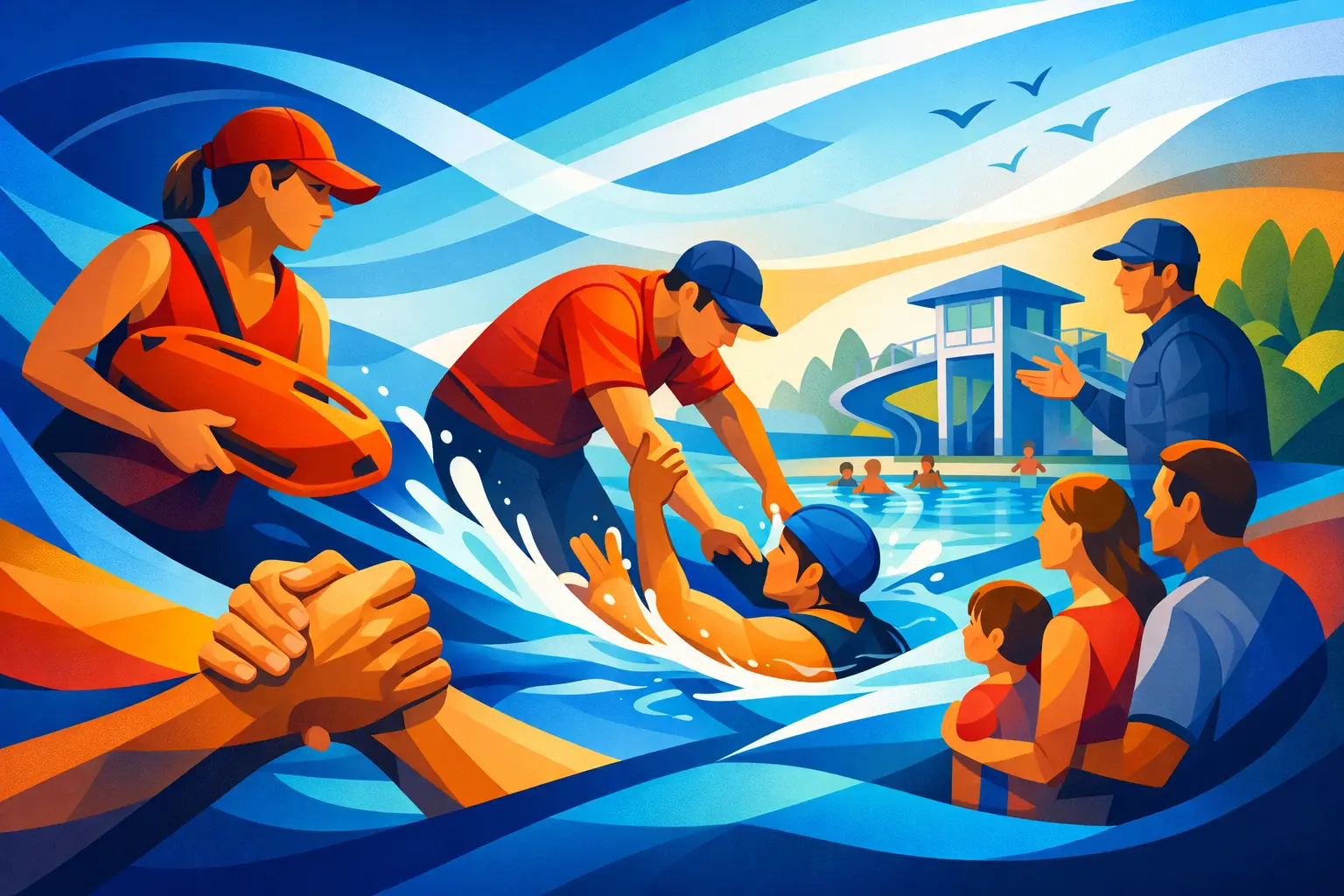
A child waiting months for swim lessons, a pool struggling to hire qualified staff, and a school without a clear water-safety message may appear to be separate problems. They are not. Each reflects a gap that no single organization can reliably close alone. A community drowning prevention partnership guide gives local leaders a practical way to connect the people, facilities, education, and resources needed to reduce those gaps.
The goal is not to create another committee that meets without action. It is to establish shared responsibility for water safety across the places where families learn, recreate, make decisions, and seek support. Effective partnerships turn concern into coordinated work: more access to instruction, stronger supervision practices, clearer public education, and a better understanding of local aquatic needs.
Build a community drowning prevention partnership around a shared purpose
Start with a purpose that partners can recognize in their own work. “Prevent drowning” is essential, but it can feel broad unless it is connected to local conditions. A more useful purpose might be increasing access to water-safety education for families, reducing barriers to swim instruction, improving safe practices around open water, or strengthening the local pipeline of trained aquatic personnel.
The right focus depends on the community. A city with limited pool access may need to prioritize transportation, affordable lessons, and use of school facilities. A lake community may need consistent messaging about life jackets, designated swim areas, and adult supervision. A community with established pools but uneven participation may need trusted messengers who can reach families that have not historically used aquatic programs.
Begin by identifying what is known and what still needs to be learned. Review available program enrollment, waitlists, facility schedules, geographic access, staffing capacity, incident reports when appropriate, and feedback from families and frontline staff. Do not assume that low participation means low interest. Cost, transportation, language, schedules, cultural experience, and lack of awareness can all shape who reaches aquatic programs.
A partnership works best when it names a manageable first objective. Trying to solve every aquatic safety challenge at once can stall progress. A focused first-year goal creates momentum and provides a basis for measuring results.
Bring together partners with distinct roles
A useful partnership includes organizations that can act, not simply organizations that can endorse the effort. Aquatic facilities and parks departments often provide instruction, staff expertise, and space. Schools can help reach students and families. Public health organizations and hospitals may contribute education capacity and local data. Recreation nonprofits, youth-serving organizations, and faith communities can identify barriers and build trust. Municipal leaders, foundations, and local businesses may help remove funding or transportation obstacles.
Each partner should understand why its role matters. A school district may not operate a pool, but it can distribute water-safety information, host family education events, or incorporate age-appropriate safety messaging into existing programs. A fire department or emergency services agency may support outreach about life jackets and emergency preparedness without becoming responsible for swim instruction. A local employer may help sponsor lesson scholarships or provide volunteer support for a community event.
Avoid building a partnership around titles alone. The most effective participants are people who can make decisions, coordinate resources, communicate with their constituencies, or deliver programs. Include pool operators, instructors, lifeguards, coaches, and community educators early. They understand the daily operational realities that can make a well-intended plan workable or unrealistic.
Establish clear ownership from the start
Partnerships lose momentum when every task belongs to everyone. Put responsibilities in writing, even for a small initiative. Identify who will convene meetings, manage communications, maintain a shared calendar, track outcomes, and report progress. Decide how decisions will be made and what level of commitment is expected from participating organizations.
This structure does not need to be complicated. A short charter can define the purpose, membership, first-year priorities, meeting schedule, and measures of progress. It also gives new participants a clear orientation and helps prevent the work from depending on one highly committed individual.
Design action around the full water-safety continuum
Swim lessons are a vital part of drowning prevention, but they are not the only component. Communities are stronger when their approach recognizes that water safety involves layers of protection. Education, active supervision, physical barriers, trained personnel, life jackets, emergency readiness, and access to safe aquatic environments all have a role.
For families, the partnership should communicate practical messages that are consistent across schools, pools, camps, clinics, and community events. Keep the message direct: designate an attentive adult when children are in or near water, use properly fitted life jackets where appropriate, understand that swim ability develops over time, and choose programs that support safe behavior and skill development.
For facilities and programs, the work may include reviewing supervision expectations, staff training, emergency action plans, lifeguard readiness, signage, participant screening, and communication with parents. These efforts should be aligned with each facility’s policies, risk environment, and applicable requirements. A public pool, a summer camp waterfront, and a school natatorium do not face identical conditions.
For community leaders, the partnership can make the case that aquatic access is a safety issue as well as a recreation issue. When pools close, lesson capacity shrinks, or transportation prevents participation, communities lose opportunities for children and adults to build water competency under qualified instruction. That is a planning concern worth discussing alongside facility investment, recreation access, and public health priorities.
Make access a central operating question
A program cannot prevent drowning in a population it does not reach. Partners should regularly ask who is missing from current programs and why. The answer should shape scheduling, pricing, communications, enrollment systems, transportation planning, and the locations where education is delivered.
Affordability matters, but free lessons alone may not solve access challenges. Families may need evening or weekend options, translated materials, transportation support, childcare for siblings, or a registration process that does not require reliable internet access. Some may be unfamiliar with pool environments or hesitant to participate because they do not see staff, instructors, or program materials that reflect their community.
Work with trusted local organizations before designing outreach. Ask families and community representatives what would make participation realistic. Then test small changes and learn from the response. A pilot lesson block at a different time, a school-based registration event, or a transportation partnership can reveal more than a broad awareness campaign.
Measure progress that partners can use
Count participation, but do not stop there. Enrollment numbers show activity, not necessarily impact. A partnership should track measures that reflect both reach and operational improvement. These might include lesson completion, scholarship use, waitlist changes, geographic distribution of participants, staff training completion, life jacket distribution, family education attendance, or the number of organizations using shared safety messages.
Qualitative feedback is equally useful. Ask instructors whether participants are arriving prepared. Ask families whether registration was understandable and whether scheduling worked. Ask community partners whether materials were useful and culturally relevant. These insights help leaders improve the program rather than simply report that it occurred.
Be transparent about limitations. If a facility has a long waitlist, say so and explain what capacity is needed. If a campaign reached many families but did not increase enrollment, examine whether the barrier was awareness, cost, transportation, or available class times. Credibility grows when a partnership reports both progress and remaining needs.
Sustain the work beyond a campaign
Drowning prevention is not a single seasonal message. It needs an operating rhythm that reflects the community’s aquatic calendar. Plan ahead for summer recreation, school breaks, camp seasons, pool openings, and periods when families are most likely to be near water. At the same time, maintain year-round pathways to swim instruction, workforce development, facility planning, and family education.
Funding should also match the work. Short-term grants can support pilot programs, scholarships, outreach materials, or equipment, but they may not sustain staffing or lesson capacity. Partners should distinguish between one-time needs and recurring operating needs. This makes conversations with boards, donors, and public funders more realistic.
Total Aquatic Education and Training Institute supports the kind of shared learning that helps communities connect operational practice with broader safety goals. Training, professional development, and practical resources are most valuable when local partners use them to improve what families experience at the pool, waterfront, school, or community program.
A strong partnership does not need to begin with a large budget or a perfect plan. It needs a clear purpose, committed people, honest information, and the discipline to take the next useful step. When organizations work together with that focus, water safety becomes part of the community’s everyday capacity to protect, teach, and connect its people.