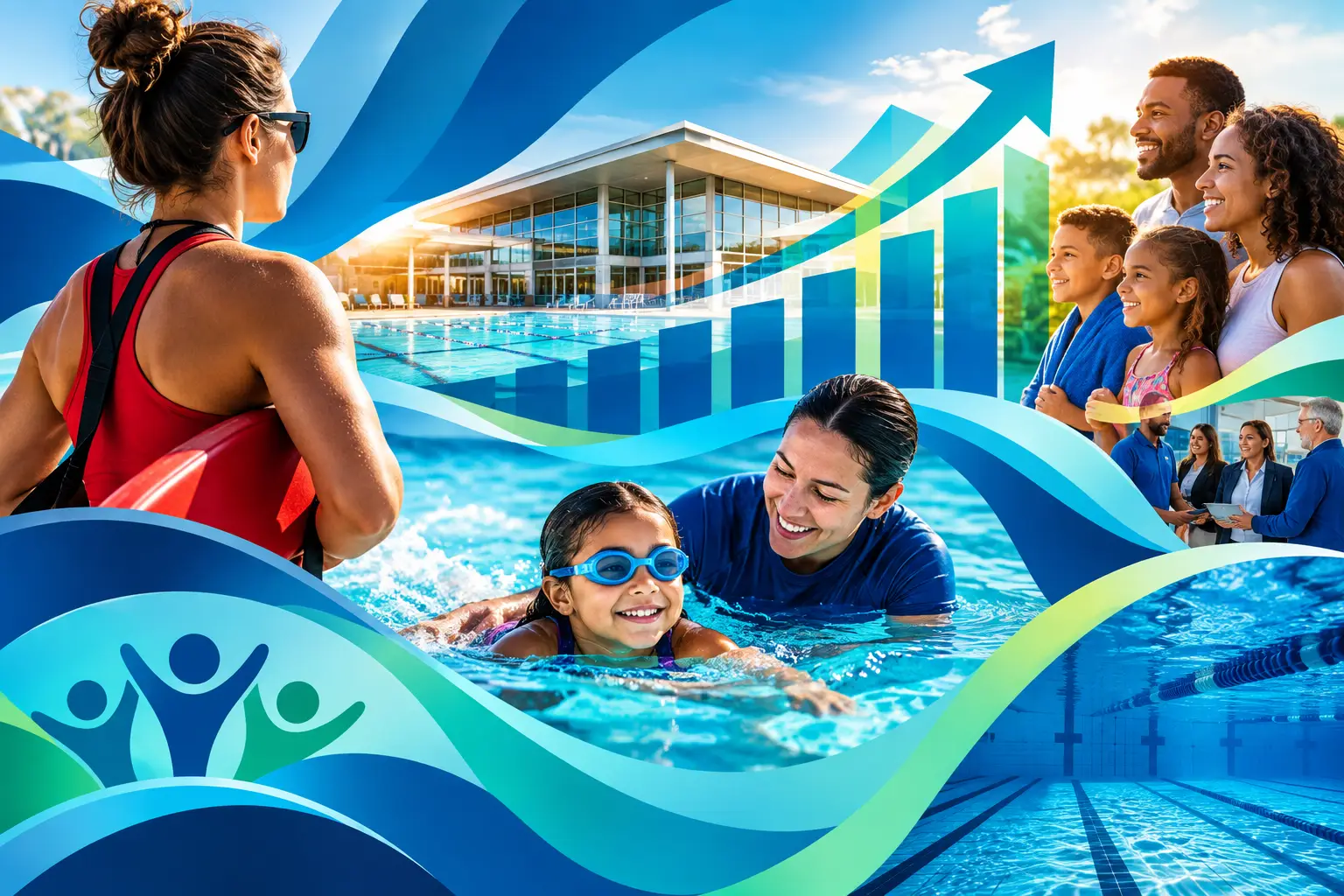
A pool can be full from morning swim lessons through evening lap lanes and still face an uncertain future at budget time. That tension is behind many of the pool funding trends affecting aquatic programs: communities are being asked to preserve aging facilities, expand access, strengthen safety, and manage higher operating costs at the same time. The strongest responses begin by treating aquatics not as a discretionary amenity, but as essential community infrastructure for water safety, health, recreation, education, and connection.
Funding is never only about finding a new revenue source. It is about matching the right source to the right need, showing decision-makers what is at stake, and building a plan that can withstand changing priorities.
Pool Funding Trends Moving From Repair to Long-Term Planning
For years, many aquatic facilities have addressed capital needs one failure at a time: a pump replacement, a roof repair, a filtration upgrade, or a temporary patch to extend a season. That approach is understandable when resources are limited. It also makes it difficult to explain the true cost of keeping a facility safe, reliable, and useful.
A growing number of communities are moving toward multi-year capital planning. Instead of presenting a single urgent repair, facility leaders are documenting asset condition, anticipated replacement cycles, accessibility needs, energy use, water systems, and program demand. This gives boards and public officials a clearer choice: invest strategically now, or accept increasing disruption and cost later.
This trend does not mean every community needs a major new aquatic center. In some cases, targeted modernization of an existing pool is the better investment. In others, a seasonal outdoor pool, school facility, or regional partnership may better match local demand. The key is a facility plan grounded in actual use, community need, and operating capacity rather than a building concept alone.
Capital requests are becoming service requests
The most effective funding conversations connect infrastructure to outcomes. A failing mechanical system matters because it can reduce available swim lessons, limit team practice time, interrupt therapy or wellness programs, and make it harder to maintain dependable water quality. A renovated locker room matters because it improves accessibility, family use, privacy, and the overall welcome a facility provides.
That framing is especially important for decision-makers who do not work on the pool deck. They need to understand what the facility enables: children learning foundational water-safety skills, adults finding low-impact exercise, schools meeting instructional needs, teams developing athletes, and residents having a place to gather year-round.
Diversified Revenue Is Replacing Reliance on One Source
Public appropriations, membership fees, admissions, and program revenue remain important, but few facilities can depend on one source alone. One of the most practical pool funding trends is the effort to build a balanced funding model with several dependable components.
Earned revenue can include lessons, memberships, rentals, competitive events, camps, certification courses, and specialty programming. These activities can strengthen financial stability, but leaders should be realistic about their limits. Programs with the highest community value are not always the highest-margin programs. Learn-to-swim access, adaptive programming, school partnerships, and open swim may require support even when they do not fully recover costs.
That is where public funding, philanthropy, sponsorships, grants, and partner contributions can play different roles. A municipality may support baseline operations because the facility serves a public purpose. A local foundation may help fund scholarships or water-safety education. A health system, school district, or community organization may contribute when the program advances shared goals. These sources work best when expectations, measurement, and responsibilities are clear from the beginning.
Diversification should not become a collection of one-time fixes. A grant for equipment is valuable, but it should not create an ongoing replacement obligation without a plan. A sponsorship can help, but it may fluctuate from year to year. Leaders need to distinguish between funding that supports capital improvements, funding that starts a program, and recurring revenue that can sustain staffing and daily operations.
Access and Equity Are Becoming Stronger Funding Cases
Funders and public agencies increasingly want to know who benefits from an aquatic investment and who may be left out. This is not simply a reporting exercise. Access shapes whether a pool fulfills its role as a community asset.
For aquatic professionals, this means collecting useful information about participation. Consider waitlists for swim lessons, geographic gaps in service, transportation barriers, scholarship use, school partnerships, adaptive program demand, and the hours available for open recreation. These measures can reveal needs that attendance totals alone do not show.
A full lesson schedule may look successful, for example, while a long waitlist shows that many families cannot obtain instruction. A facility with strong membership revenue may still have limited access for residents who need low-cost programs or convenient public hours. These are not reasons to dismiss earned revenue. They are reasons to build a clearer case for targeted support.
When presenting an access-focused request, be specific. Explain what the investment will provide, who it will serve, how eligibility will work, and how the organization will monitor results. Vague commitments to serve the community are less persuasive than a practical plan for expanded lesson capacity, transportation support, scholarship enrollment, or school-based water-safety opportunities.
Workforce Costs Are Part of the Funding Conversation
A pool cannot deliver safe programs without trained, supported people. Yet staffing is sometimes discussed as a temporary operational issue rather than a core funding need. Lifeguards, instructors, operators, supervisors, maintenance teams, and program leaders are central to both safety and service quality.
Funding plans need to account for recruitment, training, certification, supervision, retention, and coverage. Reducing hours because positions cannot be filled may be necessary in the short term, but it can weaken revenue, public trust, and program continuity over time. The better question is how to design schedules, compensation, career pathways, and training systems that make aquatic work more sustainable.
There is no single answer. A municipal pool may have different constraints than a nonprofit YMCA, school district, or private club. Still, organizations can improve their position by tracking staffing vacancies, canceled programs, overtime, training completion, and turnover. This information helps leaders show that workforce investment is directly connected to safe capacity and reliable public access.
Data Must Be Useful, Not Just Available
Aquatic leaders often have more data than they use. Registration software, point-of-sale systems, maintenance logs, incident reports, utility bills, and staffing schedules can provide meaningful evidence, but only if the information is organized around decisions.
Start with a small set of measures that answer practical questions. How many people are being served? Which programs have unmet demand? What are the largest cost drivers? Which closures or maintenance issues disrupt programming? How much subsidy is needed to maintain key access programs? What capital items are approaching end of life?
A concise dashboard can be more useful than a lengthy report. It should make it easy for staff, boards, and funding partners to see both the operational picture and the community value of the facility. Pair numbers with short examples from participants, schools, coaches, and community partners. Data establishes scale; lived experience explains why the scale matters.
How to Prepare a Stronger Funding Request
A successful request is usually prepared long before a budget hearing, grant deadline, or board meeting. It begins with internal alignment. Facility operations, programming, finance, maintenance, and leadership should agree on the problem being solved and the level of investment required.
Then build the request around a clear sequence: the current condition, the community impact, the proposed solution, the full cost, and the plan to sustain it. Be honest about trade-offs. If renovation extends the life of a facility but does not add water space, say so. If new programming requires more trained staff, include that cost. If a proposed partnership depends on shared scheduling, explain how that will be managed.
Community support is stronger when people are invited into the process before decisions are final. Listening sessions, user surveys, stakeholder meetings, and conversations with schools and partner organizations can identify needs and strengthen the eventual case. They can also surface concerns early, when adjustments are still possible.
Funding Should Protect the Purpose of Aquatics
The pressure to generate revenue can sometimes push facilities toward the most profitable uses of space while reducing time for public access, instruction, or community programs. Financial discipline matters, but so does mission discipline. Each organization must decide which services are core to its purpose and how those services will be supported.
That balance is where sound governance matters most. Leaders should establish clear priorities for safety, access, asset care, workforce development, and revenue generation. Those priorities make difficult scheduling and budget decisions more consistent, especially when demand exceeds available water time.
For organizations working to build stronger funding cases, education is part of the work. Total Aquatic Education and Training Institute encourages aquatic professionals and community leaders to use credible information, shared learning, and operational planning to protect the long-term value of aquatic programs.
The next funding conversation is an opportunity to show more than a list of expenses. It is a chance to show what a well-supported pool makes possible for the people who rely on it, and to build the practical commitments needed to keep that promise available for years to come.