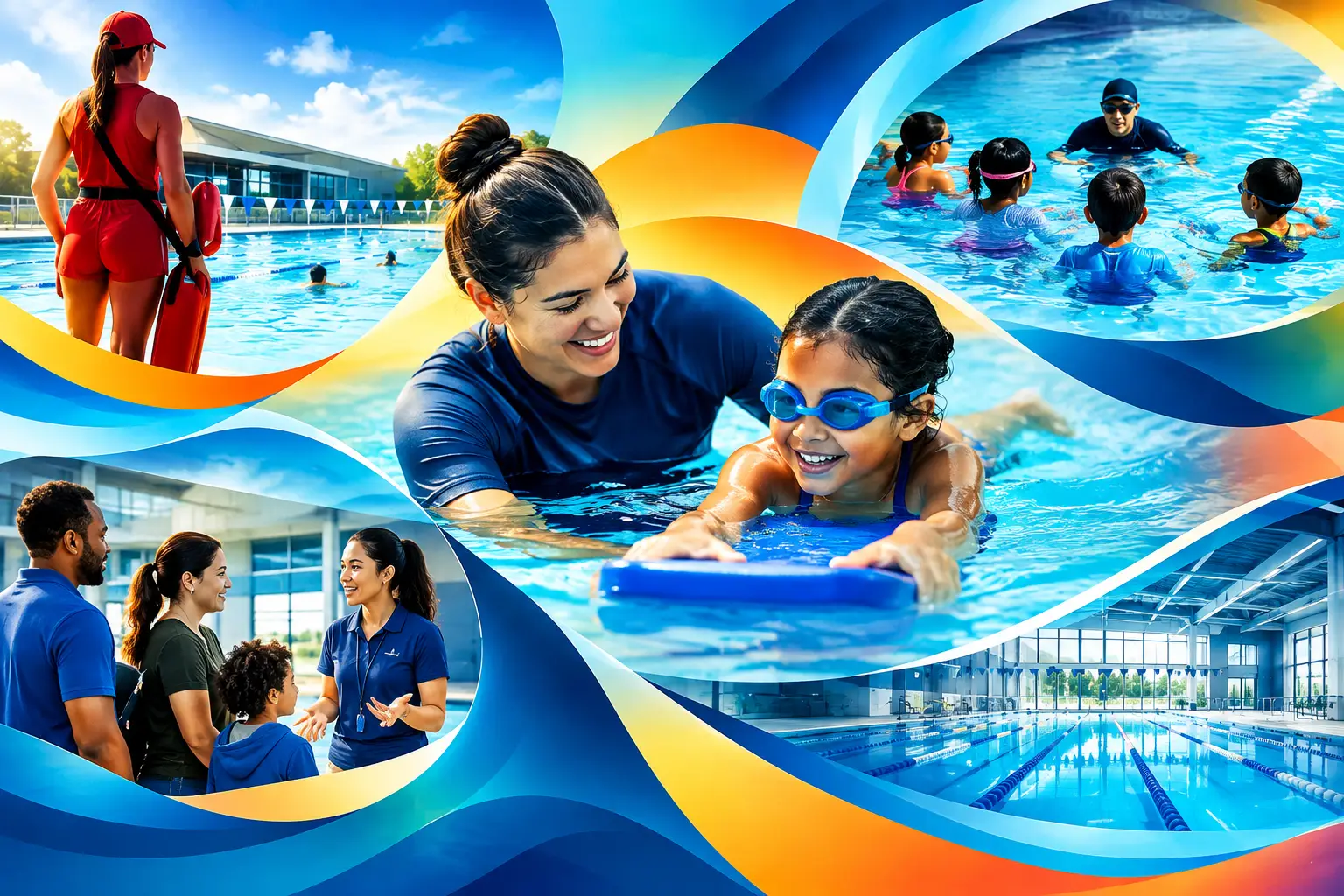
A school may have students ready to learn water safety, a committed physical education team, and strong community support - yet no pool on campus. That gap is where school aquatic partnership examples become useful. The right partnership can turn limited access into a consistent program, provided each organization is clear about safety, staffing, transportation, scheduling, and the outcomes it intends to achieve.
For school districts, aquatic facilities, municipalities, and nonprofit providers, the goal is not simply to find unused pool time. It is to create a dependable pathway for students to gain water competency, participate in aquatic education, and feel safe in and around water. The strongest arrangements recognize that a pool is a community asset, but they also respect the operational realities of running one.
What Makes a School Aquatic Partnership Work
A productive partnership begins with a shared purpose. One district may be focused on elementary water-safety instruction. Another may need a location for a high school swim team. A community may be trying to reduce barriers for families who have not had affordable access to lessons. These are related goals, but they require different schedules, staffing models, facility configurations, and measures of success.
Before planning classes, partners should agree on who is responsible for program leadership, lifeguarding, instruction, participant records, transportation, communications with families, and incident response. A memorandum of understanding is often helpful because it documents expectations before the first bus arrives. It should also address cancellation procedures, weather decisions, facility closures, insurance requirements, and how partners will evaluate the program at the end of the season or school year.
The financial model matters as much as the mission. Some facilities provide discounted access as part of their community service commitment. Others need the school district to cover lane rental, instructors, or additional lifeguard coverage. Neither approach is inherently better. The sustainable choice is the one that accounts for the actual cost of delivering a safe, well-supervised program.
Five School Aquatic Partnership Examples
1. Elementary Water-Safety Units at a Municipal Pool
A parks and recreation department reserves midmorning pool time for nearby elementary schools during the academic year. Physical education teachers remain involved with student supervision, while trained aquatic instructors lead water-safety and introductory swim activities. The program is built into the school day rather than offered only as an optional after-school opportunity.
This model works well when a municipality has a pool with weekday capacity and a district can coordinate transportation. Its central advantage is reach: students who might not be enrolled in private lessons can receive structured exposure to water safety. The main operational challenge is transition time. Changing areas, head counts, bus schedules, and class rotations can consume more time than expected, so the lesson plan must be realistic for the actual minutes students spend on deck and in the water.
A practical measure of success is not simply attendance. Partners can track whether students can demonstrate age-appropriate safety behaviors, such as entering safely, returning to the wall, floating with support, or recognizing when to ask for help. The skills selected should match instructor training, student readiness, and the facility environment.
2. High School Team Access Through a Shared-Use Agreement
A school without a competition pool partners with a YMCA, university, municipal facility, or neighboring district to host practices and meets. The facility provides scheduled water time, while the school manages coaching, team administration, eligibility, and transportation. In some cases, the school contributes to equipment, timing support, or a portion of facility operating costs.
This arrangement can preserve a swim program that would otherwise be unavailable to students. It can also provide facility partners with reliable revenue during hours that may be difficult to fill. However, competitive teams create needs beyond lanes alone. Partners should plan for locker room access, spectator management, meet setup, emergency action procedures, storage, water quality standards, and clear authority during events.
The trade-off is schedule flexibility. A shared facility may need to prioritize public recreation, lessons, therapy programs, or other rentals. School leaders should avoid assuming that a recurring practice slot will remain available indefinitely. Multi-year agreements, annual scheduling meetings, and backup plans help protect continuity for students and facility operations alike.
3. Learn-to-Swim Programs Led by a Community Nonprofit
In this model, a nonprofit organization coordinates funding, family outreach, registration support, and transportation assistance, while an aquatic facility provides water space and qualified staff. The school district may identify students and distribute information, but participation can occur after school, on weekends, or during school breaks.
This structure is especially useful when families face cost, language, transportation, or scheduling barriers. A nonprofit partner may be better positioned to secure grants, recruit volunteers for non-aquatic support roles, and build trust with community groups. The pool operator remains responsible for maintaining a safe environment and ensuring that instructional staff meet program requirements.
Clear boundaries are essential. Volunteers can support check-in, family communication, or changing-room flow, but they should not be assigned duties that require lifeguard certification, instructor qualifications, or facility authorization. The nonprofit and facility should also agree on how enrollment data is protected and how families receive consistent information about attendance, attire, expectations, and cancellations.
4. Career Pathways With a School District and Aquatic Employer
A high school career and technical education program partners with an aquatic facility to introduce students to lifeguarding, swim instruction, pool operations, and recreation leadership. Students may complete approved training, participate in supervised job shadowing, or move into seasonal employment when they meet the facility's hiring requirements.
This is more than a staffing pipeline. It helps students see aquatics as a field that includes safety leadership, education, customer service, operations, and community health. For facilities facing seasonal hiring challenges, it can create an earlier and more organized connection to potential staff members.
The partnership should not treat certification as a guarantee of employment. Students still need to meet the employer's application process, performance expectations, availability needs, and any age requirements. Facilities should also consider whether they have adequate supervisors to mentor young employees. A rushed pipeline can increase pressure on existing staff; a well-supported pathway can strengthen the workforce over time.
5. Adaptive Aquatics Through Special Education and Recreation Partners
A school district, therapeutic recreation program, and aquatic facility collaborate to provide aquatic experiences for students whose needs may not be met in a standard physical education class. The program may focus on comfort in the water, movement, participation, and individualized goals developed by the appropriate school and program professionals.
Success depends on planning well before the first session. Partners need to assess accessible entry options, changing spaces, water temperature, staffing ratios, communication supports, equipment, and transportation. Families should understand what the program includes and what it does not. Staff also need a shared plan for supervision and emergency response that reflects each participant's needs.
Not every facility can offer every type of adaptive program. Space limitations, staffing capacity, and water conditions may require a smaller pilot before expansion. Starting with a manageable group can help partners identify what works without making commitments they cannot safely sustain.
Building the Partnership Before the Calendar Fills
Many promising programs fail because planning begins after the school calendar and pool schedule are already fixed. Conversations should start early enough to address pool availability, transportation contracts, instructional staffing, budget approval, and family communication. For seasonal pools, that may mean planning during the previous fall or winter. For year-round facilities, it still means coordinating before high-demand blocks are assigned.
A small planning team should include people who understand both sides of the arrangement: school administrators or physical education leaders, aquatic directors, risk and safety personnel, transportation representatives when needed, and the staff members who will manage the program day to day. Board members and funders may approve the concept, but operational staff can identify the details that determine whether it functions well on a Tuesday morning.
It is also wise to begin with a pilot. A single grade level, one six-week unit, or a limited number of team practices can reveal scheduling conflicts and staffing needs before the program expands. Review the pilot with honest questions: Did students receive meaningful water time? Were staff roles clear? Did transportation work? Was the cost sustainable? What did families and instructors experience?
A Partnership Is a Long-Term Community Investment
The most effective school aquatic partnerships do not depend on one enthusiastic individual or a last-minute opening in the pool schedule. They are supported by written expectations, trained staff, realistic budgets, and a shared understanding that aquatic education is part of community well-being.
When schools and aquatic organizations plan with that level of care, access to the water becomes more than an occasional field trip or a seasonal privilege. It becomes a practical, repeatable opportunity for students to build skills, confidence, and a safer relationship with water.