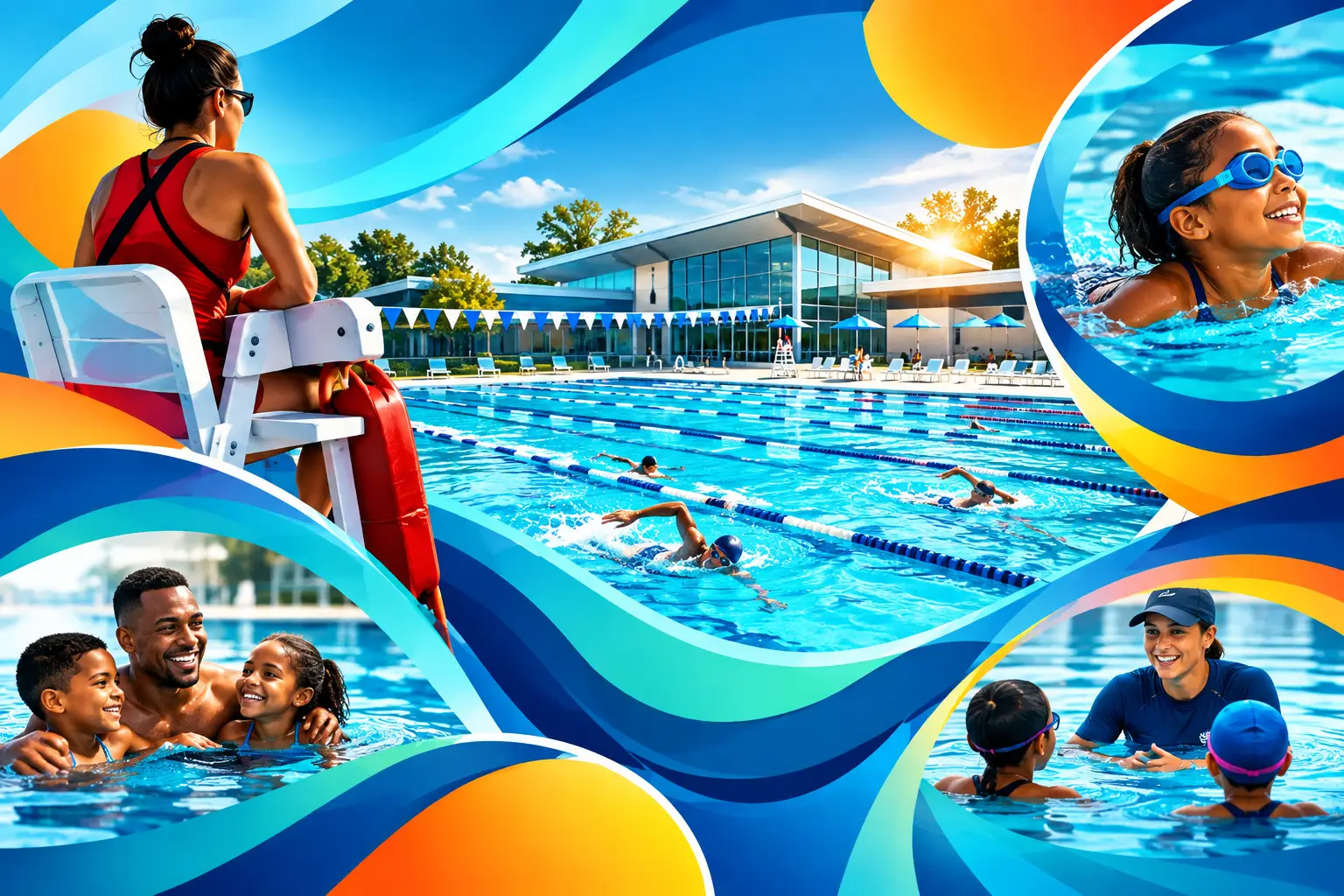
A closed pool gate is rarely just an operations issue. It can mean fewer swim lessons, canceled team practices, limited therapy access, and one less place for neighbors to gather safely. That is why United States public pool trends deserve attention from aquatic professionals and community leaders alike. The strongest facilities are responding not by chasing every new idea, but by connecting capital planning, staff development, programming, and community need.
United States Public Pool Trends: A Shift From Amenity to Asset
Public pools have long supported recreation, competition, fitness, and summer employment. Increasingly, communities are also recognizing them as essential water-safety infrastructure. A well-run facility creates regular opportunities for children and adults to build water competency, for families to access affordable activity, and for trained staff to model safe behavior around water.
That broader role is changing how many organizations discuss aquatic facilities. The question is no longer simply whether a pool is popular during the summer. It is whether the facility advances public health, youth development, inclusion, emergency readiness, and community connection throughout its usable season.
This shift matters in boardrooms as much as on deck. A pool that is evaluated only through admission revenue may appear difficult to sustain. A pool evaluated through its full community return has a more complete and accurate case for investment. That does not eliminate financial pressure, but it gives decision-makers a better framework for setting priorities.
Aging Facilities Are Driving Harder Capital Decisions
Many public pools in the United States are operating beyond the period their original systems were designed to serve. Shells, gutters, decks, filtration, mechanical rooms, locker rooms, accessibility features, and spectator areas all require attention over time. Deferred maintenance can eventually turn manageable repairs into service interruptions or full closure risks.
The trend is not simply toward replacement. It is toward more disciplined facility assessment. Organizations are taking a closer look at what they have, what condition it is in, what it costs to operate, and what the community will need over the next 10 to 20 years. In some cases, renovation is the responsible path. In others, a replacement facility or a different pool configuration may better serve current demand.
Planning should begin before a visible failure forces the conversation. An aquatic director can help guide that process by documenting recurring maintenance issues, utility patterns, program capacity, closure days, and unmet demand. Those records turn anecdotal concerns into information that boards, municipal leaders, and funders can use.
Design Is Becoming More Program-Specific
A single traditional rectangular pool cannot meet every need equally well. Communities are increasingly considering flexible water space: shallow-water areas for lessons, warm-water programming, dedicated lap lanes, accessible entries, diving or competitive features where demand supports them, and spaces designed for family recreation.
Flexibility has trade-offs. More features can increase construction costs, maintenance needs, staffing complexity, and supervision demands. The right design depends on a clear program plan, realistic operating budget, and projected staffing model. Facility planners should ask what programs the community can sustain, not only what features look appealing on opening day.
Staffing Is Now an Operating Strategy
Lifeguard and instructor recruitment remains a central concern for many operators. Seasonal hiring challenges have exposed a larger issue: aquatics cannot rely on last-minute staffing campaigns alone. Facilities need a year-round workforce strategy that treats training, retention, scheduling, and leadership development as connected responsibilities.
Successful programs are building clearer entry points for first-time employees, creating instructor and supervisor pathways, and giving returning staff meaningful reasons to come back. Competitive pay matters, but it is not the only factor. Predictable schedules, supportive supervision, quality in-service training, recognition, and opportunities to gain credentials can influence whether staff see aquatics as worthwhile work.
For managers, this means separating compliance from development. Certification is necessary, but it does not automatically prepare a new guard to communicate with patrons, recognize emerging supervision concerns, lead a rescue response, or make sound decisions during a busy program transition. Regular, scenario-based in-service training helps teams build those skills before they are needed.
Staffing decisions also shape programming. A facility should be careful not to publish a full schedule that depends on positions it has not yet filled. It is better to offer a smaller schedule that can be supervised consistently than to cancel programs repeatedly or stretch the team beyond safe operating limits.
Water Safety Is Moving Beyond a Single Lesson
Another important trend is the growing emphasis on continuous water-safety education. Swim lessons remain fundamental, but communities are recognizing that water competency develops through repeated exposure, skilled instruction, family engagement, and access to appropriate practice environments.
A strong public pool can support that work through multiple touchpoints: learn-to-swim programs, school partnerships, parent education, adaptive instruction, teen employment pathways, and clear safety messaging throughout the facility. These efforts are most effective when they are coordinated rather than treated as isolated events.
Access is a practical part of drowning prevention. Registration systems, transportation barriers, lesson times, language needs, and fee structures can all affect who participates. Operators do not need to solve every barrier alone, but they can identify where participation drops off and seek partnerships with schools, nonprofits, transportation providers, or local sponsors.
Equity should also be considered in facility operations. Accessible entry options, inclusive program descriptions, appropriately trained staff, and adaptive equipment can make a meaningful difference for participants with disabilities, older adults, and families who may not see themselves reflected in traditional aquatic programming.
Programming Is Becoming More Deliberate
Public pools are under pressure to use limited water time well. That is leading many facilities to review programs through a more practical lens: Who is using the space? When are they using it? What mission does each program support? What does it require in staffing and equipment? Is there a waiting list, or is water time being underused?
The answer varies by community. A suburban facility may need expanded youth lessons and family swim periods. An urban facility may benefit from school-day instruction, workforce development, and low-cost community access. A community with an established competitive culture may need dependable lane time and meet capacity. The common thread is intentional scheduling.
This does not mean every program must generate direct revenue. Some programs exist because they advance access, safety, or community service. However, leaders should understand the full cost and purpose of each offering. Clear program data makes it easier to protect high-value services when budgets tighten.
The Schedule Is a Safety Document
A pool schedule is more than a customer service tool. It determines bather loads, activity mix, staffing assignments, transitions, and supervision challenges. Combining incompatible activities to fill time can create avoidable risk. For example, active recreation, lap swimming, lessons, and team practice may each require different zones, rules, equipment, and guard positioning.
Before adding a new program, operators should consider how it changes the entire operating environment. Review the emergency action plan, guard coverage, participant screening, equipment needs, and transition procedures. A well-designed program is one that staff can supervise confidently, not simply one that fits an open time slot.
Data and Communication Are Strengthening the Case for Investment
Aquatic leaders increasingly need to explain their work in terms that elected officials, boards, and community partners can understand. The most useful information is often straightforward: attendance by program, lesson enrollment and waitlists, staff vacancies, training completion, closure hours, maintenance costs, incident reporting trends, and participant feedback.
Data should inform decisions, not create paperwork for its own sake. A small, consistent dashboard is more useful than a large report no one reviews. Monthly operational reviews can reveal patterns early, such as a recurring equipment failure, a lesson level with limited capacity, or a staffing shortage tied to a specific shift.
Communication also needs to reach beyond budget season. Facility leaders can share how the pool supports schools, families, employees, and local organizations throughout the year. When the public understands the purpose behind aquatic operations, conversations about renovation, staffing, and funding become more grounded in community value.
Practical Priorities for the Next Planning Cycle
For organizations deciding where to begin, three questions can bring focus. First, what conditions are most likely to interrupt safe, reliable operations? Second, which programs most clearly advance community need? Third, what workforce investments will allow the facility to deliver those programs consistently?
Use the answers to build a short action plan with owners, timelines, and measures of progress. A facility assessment may be the first priority for one community. Another may need a stronger instructor pipeline, revised lesson registration, or a more realistic seasonal schedule. The best next step is the one that reduces a known gap and can be sustained after the initial effort ends.
Public pools do not become stronger through a single renovation, policy, or training day. They become stronger when communities make steady, informed choices that protect the people, programs, and places that keep water safety within reach.